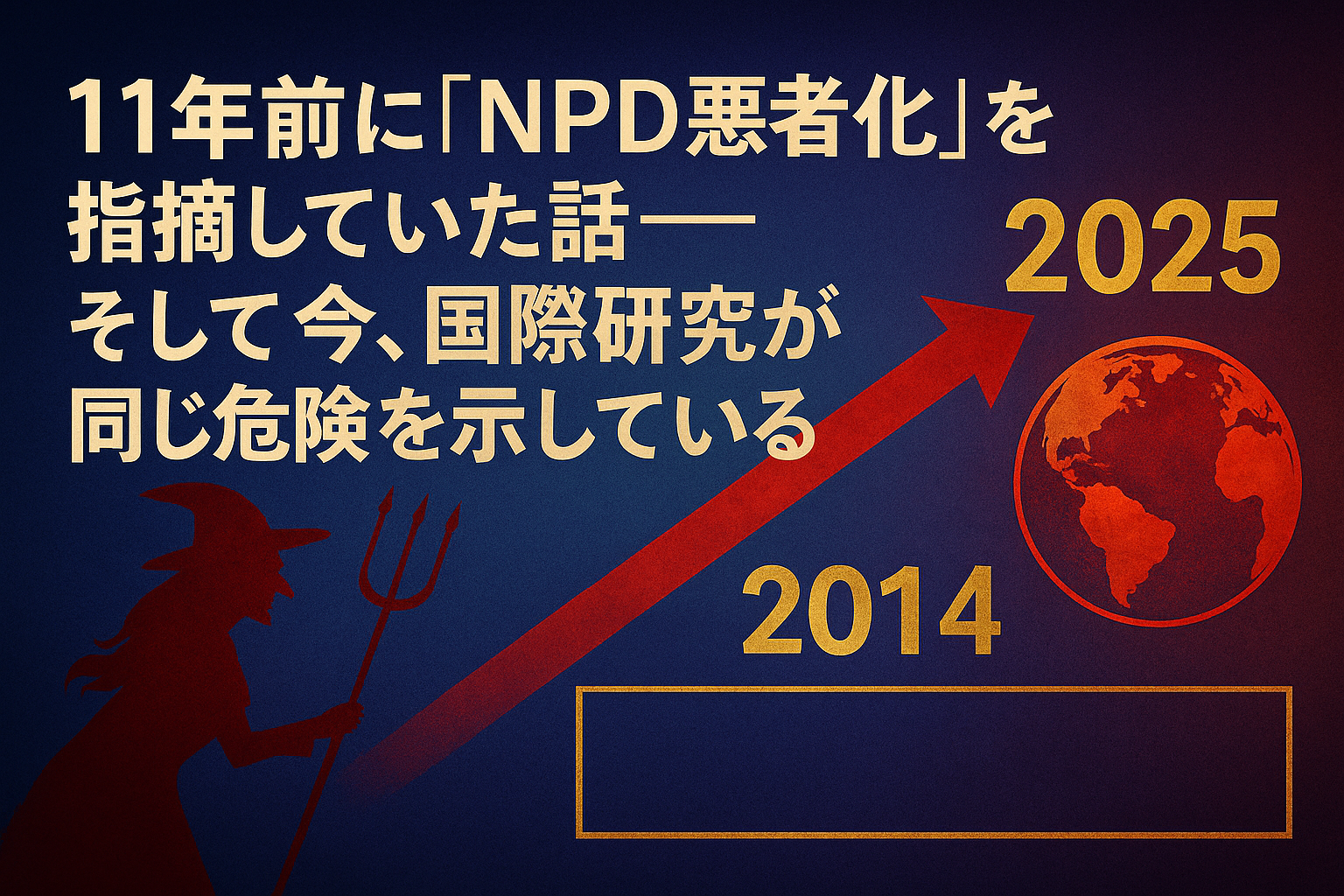
In 2014, I felt a strong sense that something was off about the “villainization of narcissistic personality disorder (NPD),” so I started writing about it on my personal blog. If you read this blog post or my older writing, you probably already know that.
At the time, I didn’t even know the word “stigma,” but I could clearly see the distortion in the atmosphere.
Even if it takes time, the truth will catch up. Eleven years later, top research institutions around the world have finally begun to officially recognize the same danger.
1 | My 2014 self: my language was immature, but my sense that something was wrong was sharp
Back then, I was just an ordinary individual, with no technical terms and no title.
Even so, I could tell that the trend of using a diagnosis as a weapon to condemn people was clearly “wrong.”
Bending people by labels, publicly denouncing them as a group, and finally branding them as “evil” and excluding them. In other words: scapegoating, demonization. That is neither support nor science.
One of the articles I wrote around that time (the writing is rough, but I’ve kept it as a record):
“Narcissistic Personality Disorder and the Real Perpetrators of Moral Harassment”
Here, I treatedthe misuse of diagnostic namesas part of the “misuse of morality.” Using words meant for medical care and support to corner people.
I understood that asan attack wearing the mask of justiceand asa form of moral harassment.2 | Using a diagnosis as a “shield” is control, not support
A diagnosis should originally be a map to protect people, or a concept that gives them a chance to recover.
But on social media, diagnostic labels increasingly became
weapons for certainty, exclusion, and attack.“People with NPD are dangerous”“Don’t get involved; they can’t be cured”
- “A monster who destroys others”
- When these stock phrases spread, the person involved becomes less able to seek help, and people around them stop trying to understand.
- The door to help is closed
. I’ve watched this happen for 11 years, and I myself was hurt by that atmosphere.
3 | Why I chose not to “go along”If I had followed the fashionable wording and blended into that controlling, manipulative crowd, I might have gotten more “likes.”
But I didn’t conform. I didn’t give in.
Because I knew it was
wrong.If no one says it, someone gets crushed. So I kept writing, in my own words, what I believed to be right.Of course, there was a price. Unreasonable attacks and threats continued. I even received anonymous threats demanding that I delete the article.
Even so, I didn’t stop speaking out because I knew that
if I lost to lies here, something truly important would be damaged.
4 | Where things stand in 2025: research has caught upRecently, researchers at Harvard University’s psychology department and elsewhere have begun to frame the stigma surrounding NPDwithin an academic framework
.
They point out that bias accumulates acrossthree layers: the individual, interpersonal relationships, and society (institutions and media),and that especially the assumptions
“they can’t be cured,” “they’re dangerous,” and “it’s just their personality”are strong,
which makesseeking care and asking for help
harder.In other words, what I felt in 2012–2014 has now beenbacked by data and language.
I’m grateful for that, truly. We’ve finally come this far.5 | Intuition → hypothesis → verification: why we must not lose that orderI am not a researcher, and my knowledge is far from perfect.
Even so, I did have
intuition as an initial sensor.
Intuition is the seed of a hypothesis.
Given enough time, good research catches up to that seed. That was true this time too.That is why it’s troubling when honest first-hand writing that begins from intuition disappears from search and social media spaces.(At the time, articles I wrote on this topic had accumulated over 1 million views, but after a Google update they dropped to almost zero…)I wanted there to be more opportunities for articles based on intuition to attract traffic as well. At the time, I felt my voice about the truth had been silenced. In reality, that wasn’t actually the case, but that’s how it felt to me then. I was writing about very important things that were true.Diverse voices (intuition) and verifiability
. I think society only moves forward when it has both.
6 | Frequently asked questions (short answers)
Q1. “Aren’t all people with NPD dangerous?”
A. No,
there are individual differences.Some are not violent, some are kind, and some are quiet. Blanket statements that assume danger only deepen misunderstanding and prejudice.
Q2. “Can kind or nonviolent people also fall under NPD?”
A. Yes.
I think it’s important to look more at “that person’s behavior and the exchanges in the relationship” than at the diagnosis itself.Q3. “Does being irritable mean narcissistic rage?”A. Not always. There is also “healthy anger”
at being hurt or attacked unfairly, and conversely there can be
abusive behavior (moral harassment) that deliberately provokes and mocks the person involved by hurting them**. Context matters.Q4. “Can I label someone as NPD based on an online ‘how to spot them’ list?”A. No.
Diagnosis requires a professional’s extended assessment
. Amateur judgments are error-prone, and labeling hurts both the person involved and those around them.Q5. “Isn’t pointing out a diagnosis a form of support?”A. Misuse often backfires.
Support begins not with labels but with safety, respect, boundaries, and referrals to help. If you were wrong, can you take responsibility for it?
Q6. “Doesn’t NPD never change / can’t be cured?”A. There are cases where change and improvement can be seen.
Time, support, and environmental adjustments can be key. Blanket denial takes away hope. In people with shallow insight, this can even worsen things because they cannot understand it.
A deep insight is essential to understanding narcissistic personality disorder.The British paper The Guardian
also emphasizes that “
Insight is crucial for narcissistic personality disorder,” and clinicians such as Keir Harding point out that easy labeling fuels stigma. The Guardian +1
On the research side as well, Elsa Ronningstam (Harvard/McLean) has repeatedly stressed the importance of
careful assessment and understanding. pubmed.ncbi.nlm.nih.gov +1Q7. “Is NPD caused because someone just has a bad personality?”A. Not necessarily.It is understood through multiple factors
such as biology, development, experience, and environment. Personal attacks only move the solution further away.Q8. “Posting a hurtful one-liner isn’t that serious, right?”A. It is serious.Attacks disguised as morality or diagnostic names can become a form of moral harassment.
Deliberately provoking someone, then mocking them with “See, that’s narcissism,” is also abuse.
Q9. “If someone is labeled ‘narcissistic personality disorder’ on social media, are they really diagnosed?”A. In many cases,we don’t know whether there is an actual diagnosis
. From the standpoint of privacy and confidentiality as well, it’s healthier not to
assume they have been diagnosedon your own.Q10. “Is there anything to watch out for in debate?”
A.
Focus on behavior, impact, and facts, not the person. Avoid categorical statements and personal attacks, and use boundaries if needed (**block, mute, report**).Q11. “What should I do if I’ve spread misunderstandings?”A. Prompt correction, providing sources, and stating that you’re relearning
are, in my view, the most constructive response. The speed of updates builds trust.
Q12. “What can the person involved or those around them do right away?”A. **Ensure safety (boundaries) / document (evidence) / seek advice (specialized support desks)**. Prioritizedealing with the concrete behavior happening now
rather than the label.
8 | To those carrying the same painYou are not the one at fault for being treated as the villain. The problem is prejudice and misunderstanding.We are moving into a time where “lies are harder to get away with.” Through research and AI-based verification, distortions are now easier to see than before.
When you realize something is wrong,
admit it, correct it, and move forward. I think that speed becomes trust.Understanding will always catch up.
I feel that my 11 years are a small proof of that.
Related links (detailed explanation)
For the research points and background, please see this note article
https://note.com/moral88887777/n/nb09828728277(This article is a WordPress version restructuredfrom a different angle and with different wording
around the same theme.)
Addendum: about the search environment (brief thoughts)
In 2014, honest first-hand writing by individuals was more likely to reach many people.
After that, updates increasingly emphasized trustworthiness,
→ and expertise and transparency
came to be demanded more strongly.I understand that trend. Precisely because of that, I also want room to be protected forhypotheses that begin with intuition
as long as they remain in a verifiable form.
If we cut down every sprout, we also erase future discoveries.
】】】】】】】】】】】】】】】】】】】】】】】】】】】】】】】】】】】】】】】】】】】】】】】】】】】】】】】】】】】】】】】】】】】】】】】】】】】】】】】】】】】】】】】】】】】】】】】】】】】】】】】】】】】】】】】】】】】】】】】】】】】】】】】】】】
】】】】】】】】】】】】】】】】】】】】】】】】】】】】】】】】】】】】】】】】】】】】】】】】】】】】】】】】】】】】】】】】】】】】】】】】】】】】】】】】】】】】】】】】】】】】】】】】】】】】】】
】】】】】】】】】】】】】】】】】】】】】】】】】】】】】】】】】】】】】】】】】】

田舎のネットに、
もうひとつの選択肢。
WiMAXが窓際でやっとだった僕の家。Starlinkに替えた実体験と、導入前の確認ポイントをまとめました。
公式で詳細を見る(紹介リンク・新しいタブで開きます) 実体験と紹介特典を見る紹介リンクから条件を満たして契約すると、筆者に報酬が付与されます。
Gentle Next Step
読み終えた余韻の先で、 次の一歩を静かにつなぐ。
お問い合わせ、サービス案内、資料請求、無料相談など、記事の流れを崩さず自然に次の行動へつなげるためのCTAです。画像・文言・色はテーマ設定から自由に変更できます。

Related Articles



Conversation
Be the First Voice
読んだだけで終わらせないでください。
感じたことを、コメント・発信・メモなど、何かの形で外に出してみてください。
反応した瞬間から、変化は始まります。
この場所に、最初の感想や気づきをそっと残せます。